Kiso

%20--%3e%3cdefs%3e%3cstyle%3e%20.st0,%20.st1%20{%20fill:%20%23ffffff;%20}%20.st2%20{%20fill:%20%238585bc;%20}%20.st1%20{%20fill-rule:%20evenodd;%20}%20.st3%20{%20fill:%20%238eccf5;%20}%20%3c/style%3e%3c/defs%3e%3cpath%20class='st0'%20d='M50.2,0c1.2,0,2.4.5,3.8,2.1,1.4,1.6,2.8,4.1,4.1,7.3,2,4.8,3.6,10.9,5.3,17.5-5.3,6.7-9.4,19-14.9,28.6-4.9-6.9-8.9-14.5-14.6-17.5.4-1.4.8-2.8,1.1-4.2,2.4-9.1,4.5-17.9,7.1-24.4,1.3-3.3,2.7-5.7,4.1-7.3C47.6.5,48.8,0,50,0h.2Z'/%3e%3cpath%20class='st3'%20d='M28.9,39.6c2.7,0,5.1,1.4,7.7,4.1,2.6,2.8,5,6.6,7.8,10.7.8,1.2,1.7,2.5,2.6,3.8-4,6.2-8.7,10.8-15.1,10.8H0c5.8-3.4,10-9.3,13.5-14.5,2.8-4.2,5.2-7.9,7.8-10.7,2.6-2.7,5-4.1,7.7-4.1h-.1Z'/%3e%3cpath%20class='st2'%20d='M71.5,25c2.2,0,4.6,1.7,7.3,6,2.7,4.2,5.1,9.8,7.9,15.8,2.7,5.8,5.7,12,9.4,16.7,1.7,2.1,3.6,4.1,5.7,5.5h-60.8c2.2-1.5,4.1-3.4,5.7-5.5,3.7-4.7,6.7-10.9,9.4-16.7,2.8-6,5.2-11.6,7.9-15.8,2.8-4.3,5.1-6,7.3-6h.2Z'/%3e%3cpath%20class='st0'%20d='M235.4,0c11.4,0,17.5,2.5,20.7,4l-2.2,8.7c-4.3-2.3-9.9-4.5-18.5-4.5s-7.6,1-10.2,3c-2.6,1.9-3.8,4.6-3.8,8s.8,4.5,2.3,6.2c1.6,1.6,3.9,2.8,7.1,3.6l11.1,2.6c5.6,1.2,9.7,3.4,12.5,6.5,2.8,3,4.2,7.3,4.2,12.1s-1,7.6-3,10.6c-1.9,3-4.7,5.3-8.3,6.9s-7.7,2.4-12.5,2.4c-11.5,0-19.1-3.1-22.6-4.6l2.3-8.6c6.6,2.8,14.4,5,20.2,5s8.1-1,10.7-3c2.7-2,4-4.7,4-8s-.8-5.3-2.2-7c-1.5-1.7-3.9-2.9-7.1-3.7l-11.1-2.5c-5.5-1.2-9.7-3.4-12.5-6.6-2.8-3.2-4.2-6.7-4.2-11.6s1-7.3,2.9-10.2c1.9-2.9,4.7-5.2,8.1-6.8,3.4-1.7,7.5-2.5,12.1-2.5Z'/%3e%3cpath%20class='st1'%20d='M298.1,0c6.4,0,12.1,1.5,16.9,4.5,4.9,3,8.7,7.1,11.4,12.4,2.8,5.2,4.2,11.3,4.2,18.2s-1.4,13-4.2,18.3c-2.7,5.2-6.6,9.4-11.5,12.4-4.9,2.9-10.5,4.4-16.9,4.4s-11.9-1.5-16.9-4.4c-4.9-3-8.7-7.1-11.4-12.4-2.7-5.2-4.1-11.3-4.1-18.3s1.4-12.9,4.1-18.2c2.8-5.2,6.6-9.4,11.5-12.4S291.7,0,298.1,0ZM298.1,8.9c-4.6,0-8.6,1.1-12,3.3-3.4,2.1-6.1,5.2-8,9.1s-2.8,8.5-2.8,13.8.9,9.8,2.8,13.8c1.9,3.9,4.6,7,8,9.2s7.4,3.3,12,3.3,8.6-1.1,12.1-3.3c3.4-2.2,6.1-5.3,8-9.3,1.9-3.9,2.9-8.5,2.9-13.7s-1-9.8-2.9-13.8c-1.9-3.9-4.5-7-8-9.1-3.4-2.2-7.5-3.3-12.1-3.3Z'/%3e%3cpath%20class='st0'%20d='M138.4,28.9c2.4-.1,5.5-1.2,8.4-3.5,7.8-5.9,13.3-14.6,19.2-22.3.6-.8,1.2-1.5,1.8-2.3h12.4c-2.1,2.1-4.3,4.9-6.8,8-6.5,8.4-12.1,16.5-20.9,23.2,6.6,2.8,10.9,6.3,15.1,11.6,5.7,7.2,10,16.5,13.9,25.3h-10.3c-3.4-7.4-6.8-14.2-11-19.5-5.4-6.8-12.3-11.1-21.9-11.2v30.8h-10V.8h10v28.1h.1Z'/%3e%3cpath%20class='st0'%20d='M200.6,69h-10V.8h10v68.2Z'/%3e%3c/svg%3e) Apply
ApplyMany of us are long-time fans of 3Blue1Brown at Kiso. Beyond the deep mathematical underpinnings to all our work, we are constantly looking for elegant ways to reframe complex problems—whether to quickly identify the bottlenecks in a process, to simplify a system from 5 parts to 2 parts, or to provide an analogy that gets a client to an "aha" moment. Along the way, we often find ourselves crossing the typical boundaries between academic fields or job descriptions. If this sounds interesting to you, we'd love to hear from you.
About
There is a fundamental gap between today's AI capabilities and the systems that organizations actually have in production. Enterprises have invested heavily in data infrastructure and internal tooling, yet most have struggled to translate the promise of modern AI into real business value. The reasons are rarely about access to models—they're about the hard, unglamorous work of integrating AI into complex systems, aligning outputs with business objectives, and building teams with the rare combination of research depth and engineering rigor needed to ship.
Kiso exists to close that gap. We deploy talent-dense teams of applied ML engineers, researchers, and data scientists who operate at the frontier of what's possible and build toward what's practical. Our engagements are hands-on and high-ownership: we embed deeply, move fast, and leave behind systems—and teams—that are meaningfully better than when we arrived.
Featured work
Personalized recommendations
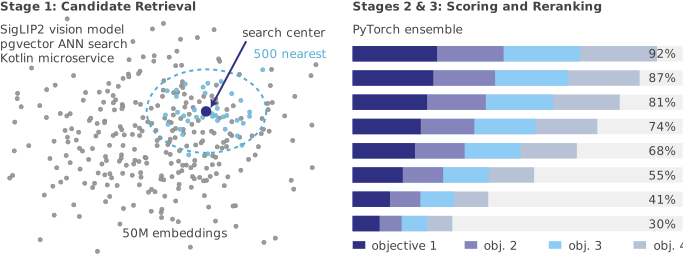
Kiso built a candidate retrieval, ranking, and post-ranking pipeline that transformed a client's recommendation system. The work involved developing custom embedding models tuned to domain-specific signals, a multi-stage ranking architecture balancing relevance and diversity, and real-time serving infrastructure capable of handling over 100 million requests per day. The result was a 50% increase in user interactions with recommended content.
Distribution network and inventory optimization
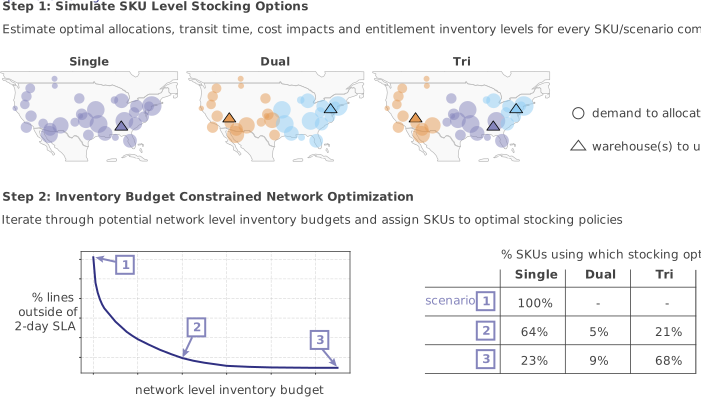
For a client managing a large distribution network, Kiso developed optimization models that reshaped how inventory was allocated across facilities and how shipments were routed through the network. By modeling the system end-to-end and incorporating stochastic demand forecasts, the team identified structural inefficiencies that had been invisible to prior approaches. Transit SLA compliance doubled, and the optimizations unlocked tens of millions in annual logistics savings.
Human-in-the-loop decision systems with LLMs
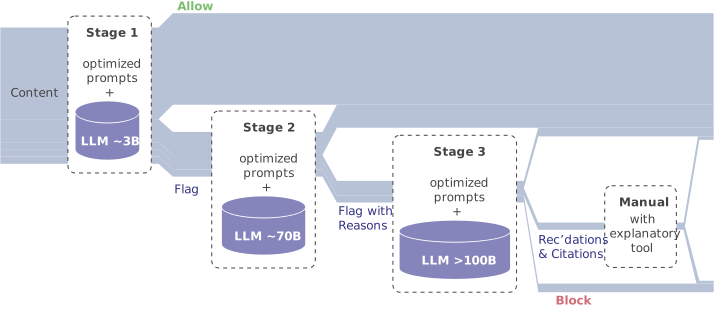
Kiso designed and deployed a multi-stage LLM pipeline for expert-assisted decision-making in high-stakes review workflows, including content moderation and regulatory compliance. The architecture separates recall-optimized retrieval from precision-optimized classification, routing ambiguous cases to human reviewers with model-generated reasoning to accelerate judgment. This approach dramatically reduced review volume while maintaining the accuracy required for consequential decisions.
Message from Grant
"We look for π-shaped people", they told me. That is, rather than just looking for a T-shape of skillsets, generally broad with one deep expertise, they seek people with multiple areas of expertise. The obvious joke is that this aligns with 3Blue1Brown because of the pi creature mascot, but I actually do think this is a meaningful positive signal for people in this audience.
Many of you are broadly technically curious people, and part of being curious like that means engaging with more than just one domain. From all the people I talked to at Kiso, a unifying theme for why they enjoyed working there was the opportunity to work on many different kinds of projects. If you feel π-shaped, they will appeal to you.
Kiso wasn't founded with the intention of being a consultancy, but the founders explained to me how they realized how much you can do today with a small talented team that would have been impossible a few years ago, and the model just fit. One noteworthy feature is how everyone shares the same title, "member of technical staff". I got the impression from everyone I talked to that they were motivated primarily by building, not by climbing a ladder.